
The Art of Dual Craftsmanship & Unmatched Difficulty
In the world of luxury leather goods, details define distinction. While premium leather, meticulous stitching, and timeless designs lay the foundation of a high-end bag, it’s the hardware that elevates it from functional to extraordinary. Among the countless hardware options, handmade enamel hardware stands in a league of its own—especially when crafted using two intricate artisanal techniques. Unlike mass-produced metal fittings, dual-craft handmade enamel hardware demands unparalleled skill, patience, and precision, making it a rare and valuable addition to luxury leather bags. This blog delves into why combining two hand-enamel techniques creates a new level of difficulty, and why this craftsmanship is the ultimate mark of luxury for discerning bag lovers.
First, let’s clarify: handmade enamel hardware for leather bags refers to metal fittings—such as buckles, zippers, locks, rivets, and decorative plaques—coated or inlaid with enamel (a glassy substance fused to metal via high heat) using traditional handcraft methods. Enamel itself adds vibrancy, durability, and a unique luster, but when two distinct hand-enamel techniques are combined, the complexity multiplies exponentially. For this exploration, we’ll focus on the most iconic pairing: Cloisonné (Wire-Divided Enamel) and Champlevé (Carved Enamel)—two crafts with centuries of history, each requiring mastery on its own, and together creating a masterpiece of technical prowess.

The Basics: Why Single-Craft Hand Enamel Is Already a Challenge
Before diving into dual-craft complexity, it’s crucial to understand why even a single handmade enamel technique is a feat. Unlike machine-applied enamel (which uses molds and automated firing), hand-enameled hardware is crafted entirely by artisans. Each step—from metal preparation to final polishing—is done manually, with zero room for error. For example, Cloisonné requires bending thin metal wires into intricate patterns and soldering them onto a metal base to create “cloisons” (compartments) for enamel. Champlevé, by contrast, involves carving recessed areas into a metal surface that are then filled with enamel. Both processes demand steady hands, an eye for detail, and intimate knowledge of how enamel behaves under high heat (too hot, and it cracks; too cool, and it doesn’t fuse properly).
Even a small flaw—a misaligned wire in Cloisonné, a unevenly carved groove in Champlevé, or a bubble in the enamel—ruins the piece, forcing the artisan to start over. For mass-produced hardware, defects are corrected with machinery or discarded without a second thought. For handmade enamel, each piece is a labor of love, with hours (sometimes days) invested in a single fitting. This is why single-craft hand-enameled hardware already commands a premium in the luxury bag market.
Dual Craftsmanship: Cloisonné + Champlevé = Next-Level Difficulty
Combining Cloisonné and Champlevé on a single piece of bag hardware isn’t just a matter of adding two techniques—it’s a delicate dance of precision, timing, and technical expertise that pushes the boundaries of artisanal work. Here’s why the difficulty skyrockets:
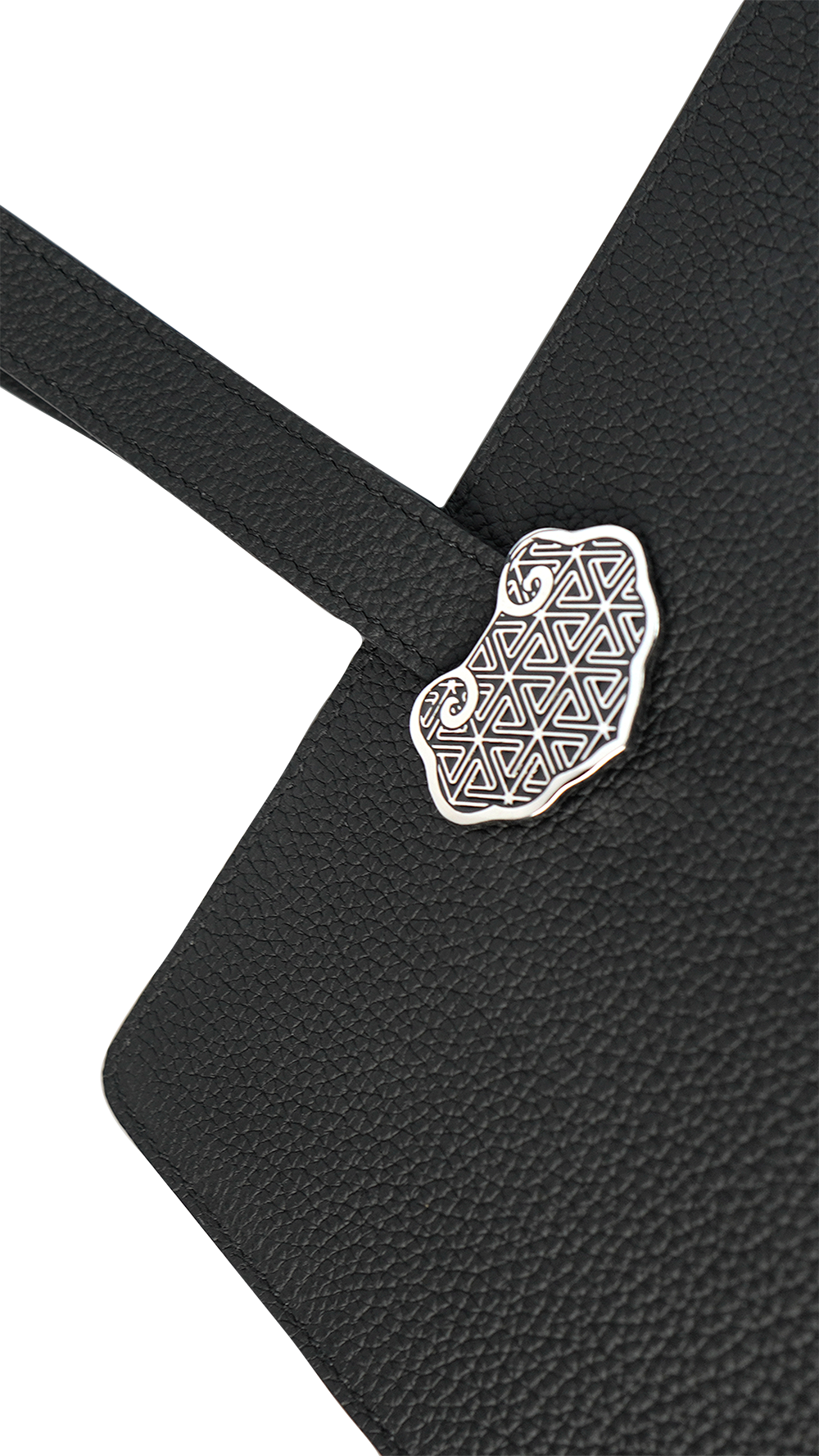
- Complementary Metal Preparation (Double the Precision)
Both Cloisonné and Champlevé require specific metal base preparations, but their needs often conflict. Champlevé starts with a thick metal blank (usually copper or silver) that must be carved to create recessed areas. Cloisonné, however, needs a smooth, flat base to solder thin wires. When combining the two, the artisan must first carve the Champlevé recesses, then carefully prepare the remaining flat surfaces for Cloisonné wire soldering—all without damaging the carved grooves. A single slip of the carving tool can render the base unusable for wire placement; a poorly soldered wire can cover or distort the Champlevé design. This step alone takes 2–3 times longer than preparing a base for a single technique.
- Enamel Application: Balancing Consistency Across Techniques
Enamel behaves differently in Cloisonné compartments versus Champlevé recesses. Cloisonné relies on thin wire walls to contain the enamel, which means the enamel paste must be applied in precise amounts to avoid overflow. Champlevé, by contrast, uses the carved metal edges as barriers, but the depth of the recess requires thicker enamel layers. When combining both, the artisan must use enamel of the exact same viscosity (a consistency that’s hard enough to hold shape but soft enough to flow) for both techniques—otherwise, one area will shrink more during firing, creating an uneven surface. Worse, if the enamel colors differ slightly (even from the same batch), the contrast between the two techniques will look jarring. Achieving color and texture consistency across Cloisonné and Champlevé sections is a skill that takes decades to master.
- Firing: A High-Stakes Balancing Act
Enamel firing is the make-or-break step for any hand-enameled piece, and combining two techniques makes it exponentially riskier. Both Cloisonné and Champlevé require firing at temperatures between 700–900°C, but the number of firings varies: Cloisonné often needs 3–5 firings to fill compartments completely, while Champlevé may need 2–3. Each firing causes the metal base to expand and contract slightly. When alternating between filling Cloisonné and Champlevé sections (and firing after each fill), the artisan must calculate how the metal will shift to avoid cracking the enamel or loosening the soldered wires. A single miscalculation can result in the Cloisonné wires popping off or the Champlevé enamel splitting—destroying hours of work.
- Polishing: Preserving Detail in Dual Designs
The final polishing step is equally challenging. After the last firing, the hardware is sanded and polished to create a smooth, glossy finish where the enamel is level with the metal (whether it’s Cloisonné wires or Champlevé edges). For dual-craft pieces, the artisan must polish around delicate Cloisonné wire patterns while ensuring the Champlevé recesses are fully smoothed—without wearing down the metal edges that define each technique. Too much pressure on the Cloisonné wires can bend or break them; too little pressure on the Champlevé sections leaves a rough texture. This step requires specialized tools (tiny buffing wheels, diamond-tipped polishers) and a steady hand to preserve the integrity of both designs.
Why Luxury Brands Invest in This High-Difficulty Craft
Given the time, skill, and risk involved, why do top luxury leather brands (and discerning artisans) choose dual-craft handmade enamel hardware? The answer lies in uniqueness, durability, and storytelling—three pillars of true luxury:
First, uniqueness: No two dual-craft enamel hardware pieces are identical. The manual nature of the work means subtle variations (a slightly different wire curve, a tiny color nuance) make each fitting one-of-a-kind. For bag lovers, this means owning a piece that can never be replicated by mass production.
Second, durability: Hand-enameled hardware is far more resistant to scratches, fading, and wear than painted or plated hardware. Enamel is a glassy surface fused to metal, so it won’t chip off or lose color over time—even with daily use. When combined with high-quality metals (like copper or silver), dual-craft enamel hardware can last for decades, making luxury bags heirloom-worthy.
Third, storytelling: Dual-craft enamel hardware carries the weight of centuries of craftsmanship. Cloisonné dates back to ancient Egypt; Champlevé was perfected in medieval Europe. By combining these techniques, brands infuse bags with cultural heritage—turning a functional accessory into a wearable work of art. For consumers, this adds emotional value: the hardware isn’t just a buckle or a lock—it’s a piece of history.
What to Look for in Dual-Craft Handmade Enamel Hardware Bags
If you’re in the market for a leather bag with dual-craft handmade enamel hardware, here are key signs of quality: 1) Clear definition between the two techniques (Cloisonné wires should be sharp and evenly spaced; Champlevé edges should be smooth but distinct). 2) Consistent enamel color and texture across both sections (no bubbles, cracks, or unevenness). 3) Artisan credentials (reputable brands will highlight the craftsmen behind the hardware, often with a signature or stamp). 4) Weight and feel—hand-enameled hardware has a substantial, premium heft, unlike lightweight mass-produced alternatives.
Conclusion: The Pinnacle of Luxury Bag Hardware
Handmade enamel hardware is already a mark of luxury, but combining two techniques like Cloisonné and Champlevé elevates it to the pinnacle of artisanal craftsmanship. The difficulty of balancing two distinct processes—each requiring mastery on its own—means only a handful of artisans worldwide can execute this work to perfection. For leather bag lovers, this hardware isn’t just an accessory detail; it’s a testament to patience, skill, and a commitment to preserving traditional crafts in a mass-produced world.
Next time you admire a luxury leather bag, take a closer look at the hardware. If it features the intricate wire patterns of Cloisonné paired with the carved recesses of Champlevé, you’re looking at a piece that took hours (if not days) of meticulous work to create. It’s a reminder that true luxury isn’t about logos or price tags—it’s about the invisible craftsmanship that turns a bag into a masterpiece.

To explore leather bags adorned with exquisite handmade enamel hardware, visit KLOISONNE—where each piece is crafted with the same dedication to dual-craft mastery that defines timeless luxury.

